Most clients we speak to have already decided they want LED. The question they're really asking is: how do we install it without disrupting the building, blowing the budget, or finishing with light levels worse than what we replaced?
The short answer: a smooth commercial LED lighting installation comes down to four things. An audit-led design. The right control system. Weekend or after-hours scheduling around tenants. And an installer who specifies all three properly. Here's what each of those looks like in practice.
Start With a Lighting Audit, Not a Product Catalogue
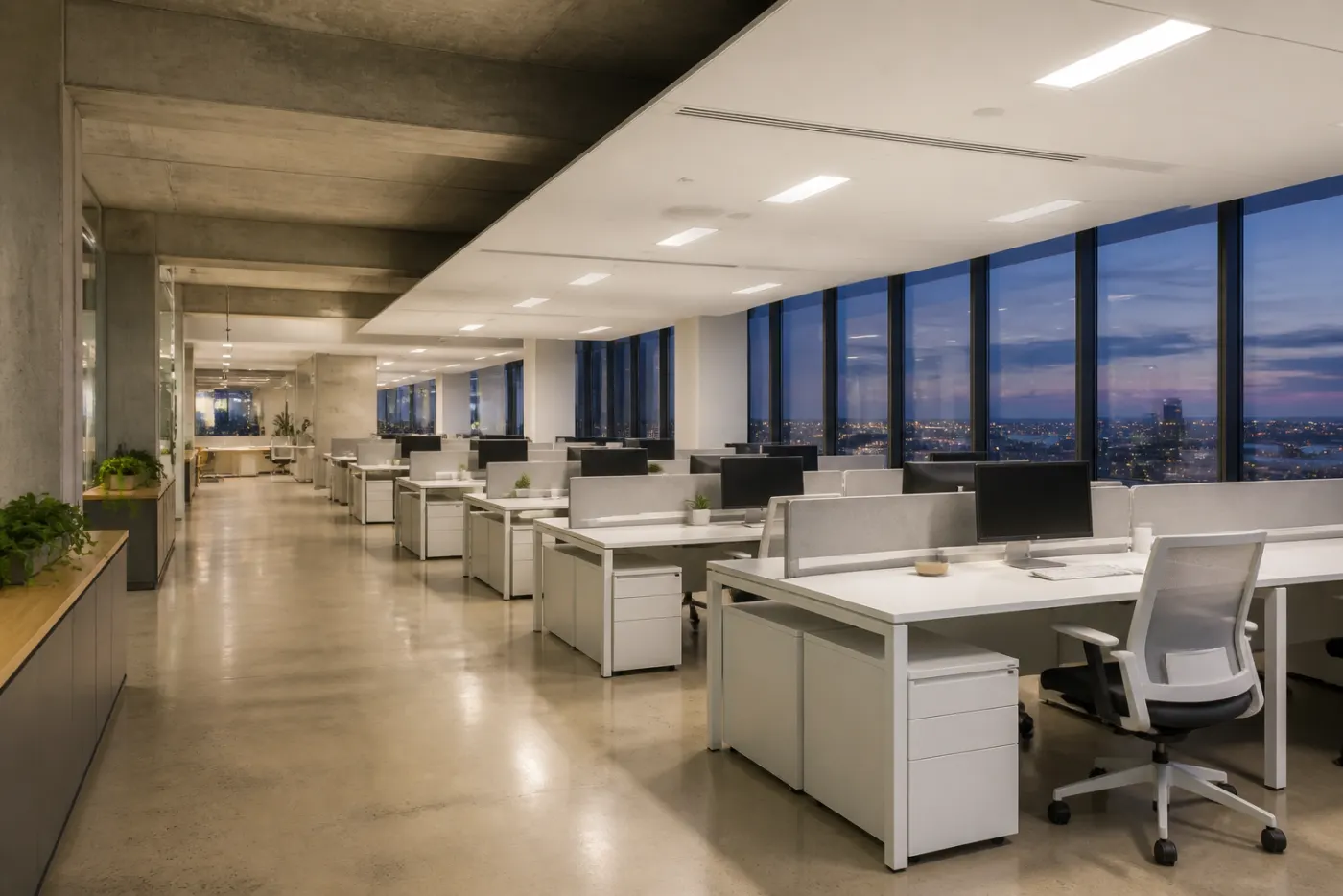
The single most common mistake we see is clients selecting fittings before anyone has measured the existing space. We turn up to a site, count the existing fluorescent fittings, measure lux levels at desk height (the AS/NZS 1680 interior lighting standard sets the targets for office spaces), and check ceiling type, void depth, and existing wiring before we recommend a single product.
A typical office floor with 600x600 ceiling tiles needs different panels than a heritage building with surface-mounted fittings. A warehouse with 9-metre ceilings needs a completely different fitting profile than one with 4-metre ceilings. Skipping the audit is how clients end up with the wrong number of fittings, the wrong colour temperature, or panels that don't physically fit the existing grid.
Every project we quote starts with an on-site audit. There's no substitute.
LED Light Replacement Isn't Always One-for-One
Replacing a fluorescent troffer with an LED panel of the same dimensions sounds like a like-for-like swap. It rarely is.
Modern LED panels deliver more lumens per watt than the fluorescents they're replacing, which means a properly designed retrofit can often achieve the same or better light levels with fewer fittings. That means lower upfront cost, lower energy consumption, and better lighting, but only if the design is done properly upfront. Counting old fittings and replacing them one-for-one is the wrong starting point.
The other catch: existing wiring. If the building was wired for fluorescents in the 1990s, you may need to update the circuits to handle modern LED drivers, particularly if you're adding DALI or 0-10V dimming control.
How to Change Downlights to LED Lights Without Replacing the Cans
If you're upgrading commercial downlights, you have three options:
- Direct replacement bulbs. Cheap, fast, but rarely the right call for commercial spaces. The light output is mediocre and the lifespan is shorter than a purpose-built LED fitting.
- Retrofit modules. Purpose-built LED units that fit existing downlight cans. Better light quality and longer life. A good middle-ground option.
- Full fitting replacement. Strip out the old downlight, install a complete new LED downlight. Highest upfront cost, best result, longest warranty.
For most commercial buildings, we recommend option 2 or 3. Option 1 saves money on day one and costs you money for the next ten years.
Schedule the Switchover Around the Tenants
A smooth installation isn't just about good products. It's about good logistics.
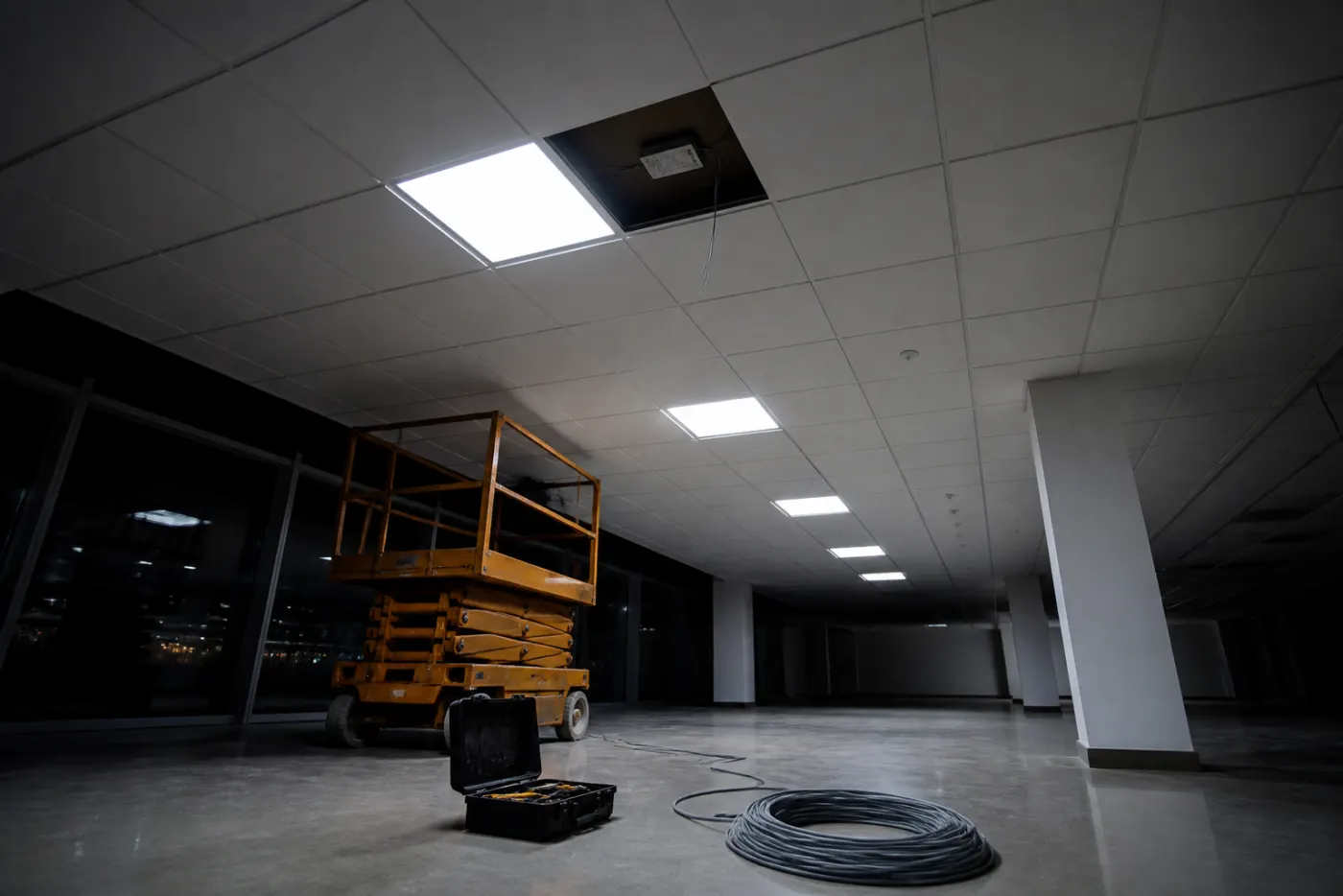
For occupied commercial buildings, we work weekends, evenings, or floor-by-floor during low-occupancy periods. At Chifley Tower, 700+ panel lights were installed across multiple floors by working floor-by-floor during single weekends, which kept tenant disruption to a minimum. (Read the full Chifley Tower story for the detail.)
For warehouses and industrial sites, scheduling around shift patterns matters just as much. Nobody wants to be on a forklift while a sparkie is on a scissor lift overhead.
Don't Forget the Controls
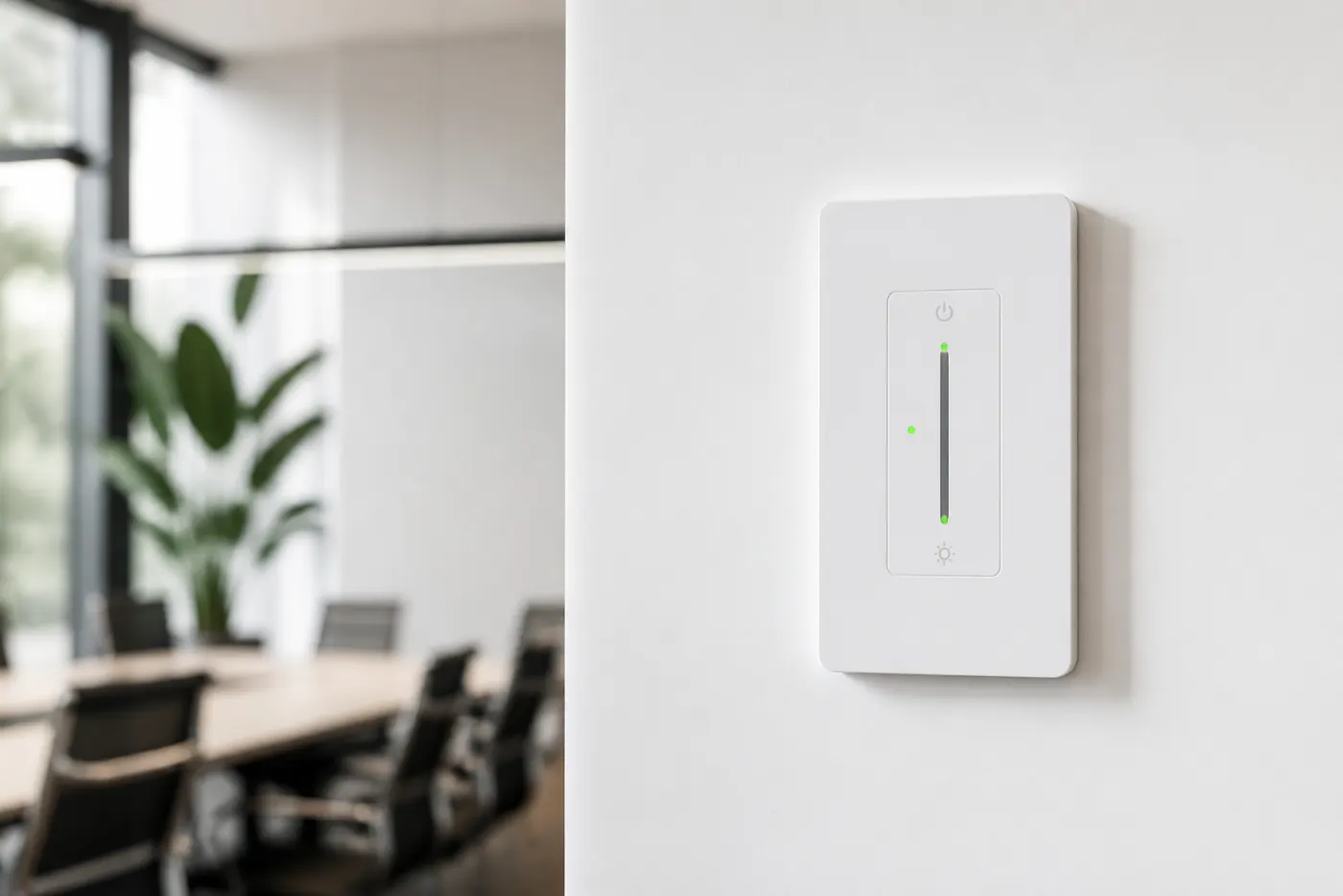
A modern LED installation isn't just about the fittings. The control system is what unlocks the energy savings, the maintenance benefits, and the flexibility for future tenant changes.
We almost always specify DALI or DALI wireless controls for commercial installations. The marginal cost is small relative to the benefits: granular dimming, occupancy sensing, daylight harvesting, and zone-based control. Together, those typically deliver meaningful additional energy savings on top of what the LED fittings alone achieve.
If your existing building management system supports DALI, integration is usually straightforward. BMS compatibility is something we check during the audit before specifying the control system.
What a Good Commercial LED Installation Costs
We're often asked for a price per fitting. The honest answer is: it depends. A large office retrofit with existing ceiling grid, accessible wiring, and standard panel lights costs dramatically less per fitting than a heritage building with custom architectural fittings and full rewiring.
What we can tell you: commercial LED upgrades pay back over time through energy savings and reduced maintenance, with the exact period depending on operating hours, existing fittings, and electricity tariffs. Buildings registered under the NSW Energy Savings Scheme can see significantly shorter effective payback periods thanks to ESS incentives. For property owners working on improved NABERS energy ratings, lighting retrofits are one of the higher-impact upgrades available.
What to Look For in an Installer
Three things separate competent installers from the rest:
- They start with an audit, not a quote. Anyone who quotes from a fitting count alone is guessing.
- They specify control systems. A quote without DALI or 0-10V controls is a quote that's leaving meaningful energy savings on the table. Controls unlock dimming, occupancy sensing, and daylight harvesting that the fittings alone can't deliver.
- They install around your operations. Weekend work, after-hours commissioning, and floor-by-floor sequencing should be standard for occupied commercial buildings.
We've been installing commercial LED lighting in Sydney since 2008. Across the projects we've delivered, from single-floor offices to multi-tower precincts, the pattern is consistent: the projects that go smoothly are the ones where the audit, the design, and the schedule are taken seriously from day one.
Get in touch to discuss your commercial LED installation. We'll start with a site visit.